The “dog days of summer” are traditionally considered the hottest and most humid stretch of the season, running from July through August. The phrase has ancient roots, tied to Sirius, the “Dog Star,” which appears in the constellation Canis Major. While Sirius doesn’t actually cause summer heat, the expression remains a fitting description for those sweltering late-summer days when staying cool and hydrated becomes especially important.
In Southeast Tennessee, the transition from summer into fall doesn’t necessarily mean the heat disappears. Football and soccer seasons are getting underway just as temperatures can remain hot and humid, putting young athletes in a unique position. Practices, preseason conditioning, games, tournaments, and other activities can keep children active outdoors for hours.
And it’s not just athletes who need to think about hydration. Families may be spending time at parks, walking local trails, working in the yard, attending community events, or enjoying one of the area’s many outdoor attractions.
For families, young athletes, and even pets, hydration should be part of the routine wherever the day takes you.
Whether you’re headed to football practice, a soccer game, an outdoor event, or simply enjoying a late-summer afternoon, a few simple hydration habits can help everyone make the most of the season.
Visit AFC Urgent Care Ooltewah when you need convenient care.
Why Hydration Matters in Hot Weather
Your body loses water naturally throughout the day, and that loss increases when you’re exercising or spending time in hot, humid conditions. Sweating is one of the body’s primary ways of cooling itself, but it also means losing fluids.
Humidity can make summer activities especially challenging because sweat doesn’t evaporate from the skin as efficiently in moist air. That means your body may have to work harder to cool itself, making regular hydration and breaks even more important.
Waiting until you’re extremely thirsty isn’t always the best strategy. Instead, make hydration a regular part of your day. Drinking small amounts of water consistently can help replace fluids before you become significantly dehydrated.
For most everyday activities, plain water is an excellent choice. You can also get fluids through water-rich foods such as watermelon, cucumbers, strawberries, oranges, and tomatoes. If plain water feels boring, sparkling or fruit-infused water can provide some variety.
One easy way to keep track of hydration is to carry a reusable water bottle. Setting reminders on a phone or establishing regular water breaks can also help turn hydration into a habit rather than something you remember only when you’re thirsty.
Hydration Tips for Young Athletes
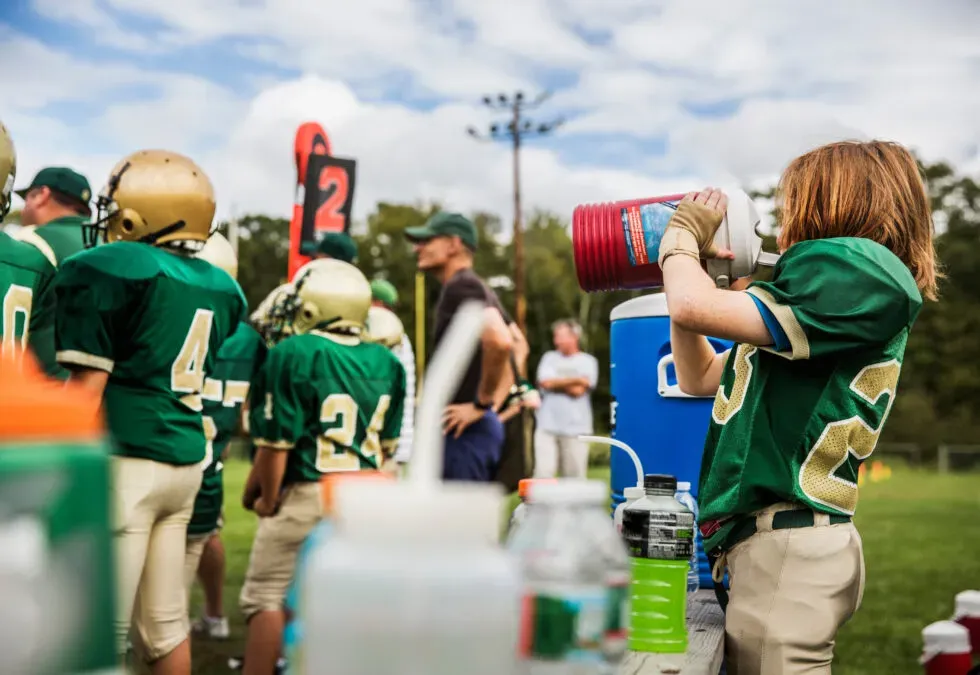
Summer and early fall sports can make hydration more challenging because young athletes may spend long periods running, practicing, or competing while sweating heavily.
This is especially important during football and cheerleading practices, preseason conditioning, soccer games and tournaments, marching band activities, and other organized outdoor activities that can keep children active for hours.
Football deserves particular attention because players may spend extended periods practicing in full equipment. Helmets, pads, and other gear can make it more difficult for athletes to recognize how much heat and fluid they’re losing during activity.
A good place to start is before practice or a game. Young athletes should begin activity well-hydrated rather than trying to catch up once they are already sweating. For brief exercise, water may not be necessary during every activity, but it should always be readily available. For longer periods of exercise, particularly in the heat, athletes should drink regularly to replace fluids lost through sweat.
The amount an athlete needs can vary considerably. For longer exercise, one set of practical recommendations suggests approximately 3 to 8 ounces every 20 minutes for young teens and 16 to 32 ounces per hour for young adults, with individual needs varying based on sweating and conditions. Johns Hopkins Medicine also offers further information about athletes and the importance of hydration.
Water is generally sufficient for most young athletes when they are eating regular meals. Sports drinks may have a greater role when activity is longer and more intense; temperatures are higher, sweating is heavy, or athletes have limited opportunities to eat between events.
Parents and coaches should also avoid encouraging athletes to overdrink. More water isn’t always better. Drinking significantly more fluid than the body is losing can lead to dangerously low sodium levels, known as exertional hyponatremia.
Make Hydration Part of the Family Routine
Parents can make staying hydrated easier for children by building it into the day’s routine. A few simple habits can help keep the whole family hydrated, whether you’re at home or heading out for the day:
- Keep water accessible: Have water bottles readily available and encourage regular water breaks. Offer water with meals and snacks, too.
- Plan for outdoor activities: Remember that football practices, soccer games, park visits, community events, gardening, and other outdoor activities can involve more time in the heat than expected.
- Choose cooler times for activity: Schedule more demanding outdoor activities during cooler parts of the day when possible and take regular breaks in the shade or an air-conditioned space.
- Add hydrating foods: Fruits and vegetables with high water content can make refreshing snacks while contributing to overall fluid intake.
- Choose beverages wisely: Water and other unsweetened beverages are good everyday choices. Limit excessive sugary drinks and energy drinks, which can add unnecessary sugar and significant amounts of caffeine.
- Hydrate on the go: Keep water in the car for road trips and bring bottles along for practices, games, hikes, and other outdoor adventures. Make hydration part of your family’s packing routine before leaving home.
Don’t Forget the Family Pets
Our four-legged family members need hydration, too. Dogs are susceptible to heat-related illnesses, and their water needs can increase during hot and humid weather.
A general guideline cited by the National Weather Service is that a healthy dog may drink approximately ½ to 1 ounce of water per pound of body weight each day under normal conditions. Hot weather, activity level, age, coat type, medical history, and previous heat-related illness can all affect an individual pet’s needs.
Make sure pets have access to plenty of fresh, cool water, particularly when they are outside or exercising. It’s also smart to limit walks and strenuous activity during the hottest part of the day.
A morning walk, afternoon at the park, or evening outdoor event may seem manageable, but temperatures and humidity can change throughout the day. Give pets opportunities to rest, seek shade, and drink water rather than expecting them to keep pace with a full day of activity.
Don’t forget about pavement, either. Hot asphalt and concrete can become dangerously hot for paws. A simple test is to place the back of your hand against the pavement; if it is too hot for your hand, it’s too hot for your pet’s paws.
And perhaps the most important pet-safety rule of all: NEVER leave a pet unattended in a vehicle. Temperatures inside a vehicle can rise rapidly, even when windows are cracked.
Know When It’s Time to Take a Break
Hydration is only one part of staying safe during hot weather. Pay attention to how you and your family members feel during outdoor activities, especially when temperatures and humidity are high.
For young athletes, parents and coaches should watch for:
- Unusual fatigue
- Muscle cramping
- Vomiting
- Heavy breathing
- Confusion
- Other concerning symptoms
For pets, watch for:
- Excessive panting
- Lethargy
- Refusal to eat
- Excessive drooling
- An unusually rapid or irregular heart rate
These can be warning signs that a person or pet needs to stop the activity and move to a cooler environment. For pets in particular, seek appropriate veterinary care if concerning symptoms develop.
When the weather is working against you, taking a break isn’t giving up on outdoor fun. It’s part of enjoying it safely. Whether you’re on the sidelines at a Friday night football game, watching a soccer tournament, walking a local trail, or enjoying an afternoon outdoors, listen to your body, keep water nearby, and give yourself and your pets time to cool down.
Need Care? Book an Appointment with AFC Urgent Care
If you or your child is experiencing symptoms that concern you after spending time in the heat, don’t wait to get the care you need. Walk in or book an appointment with AFC Urgent Care Ooltewah for convenient care when it fits your schedule.
Stay Hydrated and Healthy with AFC Ooltewah
The dog days of summer don’t have to mean staying indoors all season. With water bottles filled, regular hydration breaks planned, and a little extra attention given to kids, athletes, and pets, your family can enjoy the transition from summer into fall.
For young athletes, that means making hydration part of the game plan before the whistle blows. From football practices and Friday night games to soccer tournaments, marching band, and everyday outdoor activities, encourage kids to start hydrated and keep water nearby throughout the day.
For the whole family, make hydration part of the plan before heading out the door. Pack water for practices, games, weekend adventures, and time spent outdoors, and remember that pets need opportunities to drink and cool down, too.
If you’re unsure whether a concerning symptom needs medical attention, AFC Urgent Care Ooltewah is here to provide convenient care when you need it.